Monthly archive: November, 2010

Buy Free VIAGRA® Online! No Shipping Costs!

Your search for prescription free Viagra® ends here.

Original VIAGRA® pills © viagra.com

Pfizer just released the amazingly easy-to-understand Ultimate VIAGRA® DIY Guide (PDF, 30 illustrated pages). Look at the simple molecule on page one, cloning it is a breeze. Go brew your own! With a little help from your local alchemist, er, pharmacist, you can make even pills and paint them blue. Next get an empty packet and glue, then print out six copies of the image above. As a seasoned DIY professional you’ll certainly manage to fake Pfizer’s pill box. Congrats. You’re awesome.

As for the promise of “no shipping costs”: Well, I don’t ship Viagra®, so it wouldn’t be fair to charge you with UPS costs * 7.5 (I’m such an angel sometimes!), don’t you agree?

By the way, if the above said sounds too complicated, there’s a shortcut: click on the image.

Seriously

Barry’s post about Free Viagra® Links inspired this pamphlet. Google’s [buy viagra online] SERP still is a mess. Obviously, Google doesn’t care about link spam influencing search results for money terms. Even low-life links can boost crap to the first SERP.

About time to change that!

Since Google doesn’t tidy up its Viagra® SERPs, lets help ourselves to the search quality we deserve. Most probably you’ve spotted that this pamphlet was created to funnel (search) traffic to Pfizer’s Viagra® outlet. Therefore, if you’re into search quality, put up some links to this post. I promise there’s no better way magic to create clean Viagra® SERPs at Google.

Dear reader, please copy the HTML code above and paste it onto your signatures, blog posts, social media profiles … everywhere. If you keep your links up forever, Google’s SERPs will remain useful until the Internet vanishes.

Disclaimer: No, I can’t even spiel ‘linkbait’. And no, I don’t promise not to replace this page with a sales pitch for some fake-ish Viagra®-clone once your link juice gained yours truly a top spot on said SERP. D’oh!


Share/bookmark this: del.icio.us • Google • ma.gnolia • Mixx • Netscape • reddit • Sphinn • Squidoo • StumbleUpon • Yahoo MyWeb
Subscribe to      Entries Entries      Comments Comments      All Comments All Comments
 

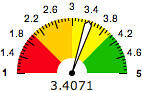
sway(”Google Webmaster Happiness Index”, $numStars, $rant);

Rumors about GWHI are floating around for a while, but not even insiders were able to figure out the formula. As a matter of fact, not a single webmaster outside the Googleplex has ever seen it. I assume Barry’s guess is quite accurate: GWHI-meter

Anyway, I don’t care what it is, or how it works, as long as I can automate it. At first I ran a few tests by retweeting Google related rants, and finally I developed sway(string destination, decimal numStars, string rant). For a while now I’m brain-dumping my rants to Google with a cron job. I had to kill the process a few times until I figured out that $numStars = -5 invokes a multiply by -1 error, but since Google has fixed this bug it runs smoothly, nine to five.

Yesterday I learned that Google launched a manual variant of my method for you mere mortals. I’m excited to share it: HotPot. Nope, it’s not a typo. Hot pot, as in bong. Officially addictive (source).

HotPot’s RTFM

Login with your most disposable Google account, then load http://google.com/hotpot/onboard with your Web browser (API coming soon, so I was told, hence feel free to poll https://google.com/hotpot/rest/sway for an HTTP response code != 503).

The landing page’s search box explains itself: “Enter a category near a familiar neighborhood and city to start rating places you know. Ex. [restaurants Mountain View, CA]”. HotPot search boxOf course localization is in place and working fine (you can change your current address in your Google Profile at any time by providing Checkout with another credit card).

As a webmaster eager to submit GWHI ratings, you’re not interested in over-priced food near the Googleplex, so you overwrite the default category: HotPot search for a search engine in Mountain View, CA

HotPot rating box for a search engine called Google in Mountain View, CAPress the Search button.

On the result page you’ll spot a box featuring Google, with a nice picture of the Googleplex in Mountain View. To convince you that indeed you’ve found the right place to drop your rants, “Google” is written in bold letters all over the building.

To its left, Google HotPot provides tips like

Get smarter SERPs.

Reading your mind we’ve figured out that a particular SERP ranking has pissed you off. You know, rankings can turn out good and bad, even yours. With you rating our rankings, we learn a bit more about your tastes, so you’ll get better SERPs the next time you search.

Next you click on any gray star at the bottom, and magically the promotional image turns into a text area.

HotPot review of a search engine called Google in Mountain View, CA Now tell the almighty Google why your pathetic site deserves better rankings than the popular brands with deep pockets you’re competiting with on the Interwebs.

Don’t make the mistake to mention that you’re cheaper. Google will conclude that goes for your information architecture, crawlability, usability, image resolution and content quality, too. Better mimick an elitist specialist of all professions or so, and sell your stuff as swiss army knife.

Then press the Publish button, and revisit your SERP, again and again.

You’ll be quite astonished.

Google’s webmaster relations team will be quite happy.

I mean, can you think of a better way to turn yourself in with a selfish spam report as an ajax’ed Web form that even comes with stars?

Google’s HotPot is pretty cool, don’t you agree?


Sebastian

spying at:

1600 Amphitheatre Parkway

Mountain View,
CA
94043

USA


Share/bookmark this: del.icio.us • Google • ma.gnolia • Mixx • Netscape • reddit • Sphinn • Squidoo • StumbleUpon • Yahoo MyWeb
Subscribe to      Entries Entries      Comments Comments      All Comments All Comments
 

How to spam the hell out of Google’s new source attribution meta elements

The moment you’ve read Google’s announcement and Matt’s question “What about spam?” you concluded “spamming it is a breeze”, right? You’re not alone.

Before we discuss how to abuse it, it might be a good idea to define it within its context, ok?

Playground

First of all, Google announced these meta tags on the official Google News blog  for a reason. So when you plan to abuse it with your countless MFA proxies of Yahoo Answers, you most probably jumped on the wrong band wagon. Google supports the meta elements below in Google News only.

syndication-source

The first new indexer hint is syndication-source. It’s meant to tell Google the permalink of a particular news story, hence the author and all the folks spreading the word are asked to use it to point to the one -and only one- URI considered the source:

<meta name="syndication-source" content="http://outerspace.com/news/ubercool-geeks-launched-google-hotpot.html" />

The meta element above is for instances of the story served from
http://outerspace.com/breaking/page1.html
http://outerspace.com/yyyy-mm-dd/page2.html
http://outerspace.com/news/aliens-appreciate-google-hotpot.html
http://outerspace.com/news/ubercool-geeks-launched-google-hotpot.html
http://newspaper.com/main/breaking.html
http://tabloid.tv/rehashed/from/rss/hot:alien-pot-in-your-bong.html

Don’t confuse it with the cross-domain rel-canonical link element. It’s not about canning duplicate content, it marks a particular story, regardless whether it’s somewhat rewritten or just reprinted with a different headline. It tells Google News to use the original URI when the story can be crawled from different URIs on the author’s server, and when syndicated stories on other servers are so similar to the initial piece that Google News prefers to use the original (the latter is my educated guess).

original-source

The second new indexer hint is original-source. It’s meant to tell Google the origin of the news itself, so the author/enterprise digging it out of the mud, as well as all the folks using it later on, are asked to declare who broke the story:

<meta name="original-source" content="http://outerspace.com/news/ubercool-geeks-launched-google-hotpot.html" />

Say we’ve got two or more related news, like “Google fell from Mars” by cnn.com and “Google landed in Mountain View” by sfgate.com, it makes sense for latimes.com to publish a piece like “Google fell from Mars and landed in Mountain View”. Because latimes.com is a serious newspaper, they credit their sources not only with a mention or even embedded links, they do it machine-readable, too:

<meta name="original-source" content="http://cnn.com/google-fell-from-mars.html" />
<meta name="original-source" content="http://sfgate.com/google-landed-in-mountain-view.html" />

It’s a matter of course that both cnn.com and sfgate.com provide such an original-source meta element on their pages, in addition to the syndication-source meta element, both pointing to their very own coverage.

If a journalist grabbed his breaking news from a secondary source telling “CNN reported five minutes ago that Google’s mothership started from Venus, and the LA Times spotted it crashing on Jupiter”, he can’t be bothered with looking at the markup and locating those meta elements in the head section, he has a deadline for his piece “Why Web search left Planet Earth”. It’s just fine with Google News when he puts

<meta name="original-source" content="http://cnn.com/" />
<meta name="original-source" content="http://sfgate.com/" />

Fine-prints

As always, the most interesting stuff is hidden on a help page:

At this time, Google News will not make any changes to article ranking based on this tags.

If we detect that a site is using these metatags inaccurately (e.g., only to promote their own content), we’ll reduce the importance we assign to their metatags. And, as always, we reserve the right to remove a site from Google News if, for example, we determine it to be spammy.

As with any other publisher-supplied metadata, we will be taking steps to ensure the integrity and reliability of this information.

It’s a field test

We think it is a promising method for detecting originality among a diverse set of news articles, but we won’t know for sure until we’ve seen a lot of data. By releasing this tag, we’re asking publishers to participate in an experiment that we hope will improve Google News and, ultimately, online journalism. […] Eventually, if we believe they prove useful, these tags will be incorporated among the many other signals that go into ranking and grouping articles in Google News. For now, syndication-source will only be used to distinguish among groups of duplicate identical articles, while original-source is only being studied and will not factor into ranking. [emphasis mine]

Spam potential

Well, we do know that Google Web search has a spam problem, IOW even a few so-1999-webspam-tactics still work to some extent. So we tend to classify a vague threat like “If we find sites abusing these tags, we may […] remove [those] from Google News entirely” as FUD, and spam away. Common sense and experience tells us that a smart marketer will make money from everything spammable.

But: we’re not talking about Web search. Google News is a clearly laid out environment. There are only so many sites covered by Google News. Even if Google wouldn’t be able to develop algos analyzing all source attribution attributes out there, they do have the resources to identify abuse using manpower alone. Most probably they will do both.

They clearly told us that they will compare those meta data to other signals. And that’s not only very weak indicators like “timestamp first crawled” or “first heard of via pubsubhubbub”. It’s not that hard to isolate particular news, gather each occurrence as well as source mentions within, and arrange those on a time line with clickable links for QC folks who most certainly will identify the actual source. Even a few spot tests daily will soon reveal the sites whose source attribution meta tags are questionable, or even spammy.

If you’re still not convinced, fair enough. Go spam away. Once you’ve lost your entry on the whitelist, your free traffic from Google News, as well as from news-one-box results on conventional SERPs, is toast.

Last but not least, a fair warning

Now, if you still want to use source attribution meta elements on your non-newsworthy MFA sites to claim owership of your scraped content, feel free to do so. Most probably Matt’s team will appreciate just another “I’m spamming Google” signal.

Not that reprinting scraped content is considered shady any more: even a former president does it shamelessly. It’s just the almighty Google in all of its evilness that penalizes you for considering all on-line content public domain.


Share/bookmark this: del.icio.us • Google • ma.gnolia • Mixx • Netscape • reddit • Sphinn • Squidoo • StumbleUpon • Yahoo MyWeb
Subscribe to      Entries Entries      Comments Comments      All Comments All Comments
 

While doing evil, reluctantly: Size, er trust matters.

These Interwebs are a mess. One can’t trust anyone. Especially not link drops, since Twitter decided to break the Web by raping all of its URIs. Twitter’s sloppy URI gangbang became the Web’s biggest and most disgusting clusterfuck in no time.

Evil URI shortenersI still can’t agree to the friggin’ “N” in SNAFU when it comes to URI shortening. Every time I’m doing evil myself at sites like bit.ly, I’m literally vomiting all over the ‘net — in Swahili, er base36 pidgin.

Besides the fact that each and every shortened URI manifests a felonious design flaw, the major concern is that most -if not all- URI shorteners will die before the last URI they’ve shortened is irrevocable dead. And yes, shit happens all day long — RIP tr.im et al.

Letting shit happen is by no means a dogma. We shouldn’t throw away common sense and best practices when it comes to URI management, which, besides avoiding as many redirects as possible, includes risk management:

What if the great chief of Libya all of a sudden decides that gazillions of bit.ly-URIs redirecting punters to their desired smut aren’t exactly compatible to the Qur’an? All your bit.ly URIs will be defunct over night, and because you rely on traffic from places you’ve spammed with your shortened URIs, you’ll be forced to downgrade your expensive hosting plan to a shitty freehost account that displays huge Al-Quaeda or even Weight-Watchers banners above the fold of your pathetic Web pages.

In related news, even the almighty Google just pestered the Interwebs with just another URI shortener’s website: Goo.gl. It promises stability, security, and speed.

Well, at the day it launched, I broke it with recursive chains of redirects, and meanwhile creative folks like Dave Naylor perhaps wrote a guide on “hacking goo.gl for fun and profit”. #abuse

Of course there are bugs in a brand new product. But Google is a company iterating code way faster than most Internet companies, and due to their huge user base and continuous testing under operating conditions they’re aware of most of their bugs. They’ll fix them eventually, and soon goo.gl -as promised- will be “the stablest, most secure, and fastest URL shortener on the Web”.

So, just based on the size of Google’s infrastructure, it seems goo.gl is going to be the most reliable one out of all evil URI shorteners. Kinda queen of all royal PITAs. But is this a good enough reason to actually use goo.gl? Not quite enough, yet.

Go ask a Googler “Can you guarantee that goo.gl will outlive the Internet?”. I got answers like “I agree with your concern. I thought about it myself. But I’m confident Google will try its very best to preserve that”. From an engineer’s perspective, all of them agree with my statement “URI shortening totally sucks ass”. But IRL the Interwebs are flooded with crappy shortURLs, and that’s not acceptable. They figured that URI shortening can’t be eliminated, so it had to be enhanced by a more reliable procedure. Hence bright folks like Muthu Muthusrinivasan, Devin Mullins, Ben D’Angelo et al created goo.gl, with mixed feelings.

That’s why I recommend the lesser evil. Not because Google is huge, has the better infrastructure, picked a better domain, and the whole shebang. I do trust these software engineers, because they think and act like me. Plus, they’ve got the resources.

I’m going goo.gl.
I’ll dump bit.ly etc.

Fineprint: However, I won’t throw away my very own URI shortener, because this evil piece of crap can do things the mainstream URI shorteners -including goo.gl- are still dreaming of, like preventing search angine crawlers from spotting affiliate links and such stuff. Shortening links alone doesn’t equal cloaking fishy links professionally.


Share/bookmark this: del.icio.us • Google • ma.gnolia • Mixx • Netscape • reddit • Sphinn • Squidoo • StumbleUpon • Yahoo MyWeb
Subscribe to      Entries Entries      Comments Comments      All Comments All Comments